Uncategorized
First Aid Essentials Every Home Should Keep Ready
Sep
A cut finger during dinner prep, a child’s scraped knee, or a burn from a hot pan can turn routine moments into a rush for supplies. First aid is about taking calm, practical action in those first minutes – while knowing when home care is not enough. A well-stocked kit gives you a faster start, but clear judgment matters just as much.
You do not need a clinic in your bathroom cabinet. You need reliable everyday supplies, stored where adults can reach them quickly and checked before they expire. For households, cars, travel bags, and workplaces, a few basics can make common injuries easier to manage.
First Aid Starts With a Fast Safety Check
Before helping someone else, look for hazards. Traffic, broken glass, fire, exposed electrical wires, chemicals, or an unstable surface can turn one injury into two. If the area is unsafe, move away and call for emergency help rather than rushing in.
Next, check whether the person is awake and breathing normally. Call 911 immediately for unconsciousness, trouble breathing, signs of stroke, severe bleeding, a serious head injury, chest pain, seizure activity, poisoning, or a possible overdose. If you are unsure, it is better to call. Emergency dispatchers can tell you what to do while help is on the way.
For a conscious person with a minor injury, ask what happened, where it hurts, and whether they have allergies or medical conditions that could affect care. Keep your voice steady. People often take their cue from the person helping them.
Wear disposable gloves when blood or other body fluids are present. If gloves are unavailable, use a clean barrier such as gauze or a folded clean cloth, then wash your hands thoroughly afterward. Do not put yourself at risk to provide care.
First Aid Essentials for Your Home Kit
The best kit is one you will actually keep stocked. A preassembled kit is convenient, but it is smart to add supplies based on your household. Parents may need child-friendly bandages and a thermometer. Travelers may want motion-sickness remedies and blister care. Anyone with a known allergy should keep prescribed emergency medication accessible and make sure family members know where it is.
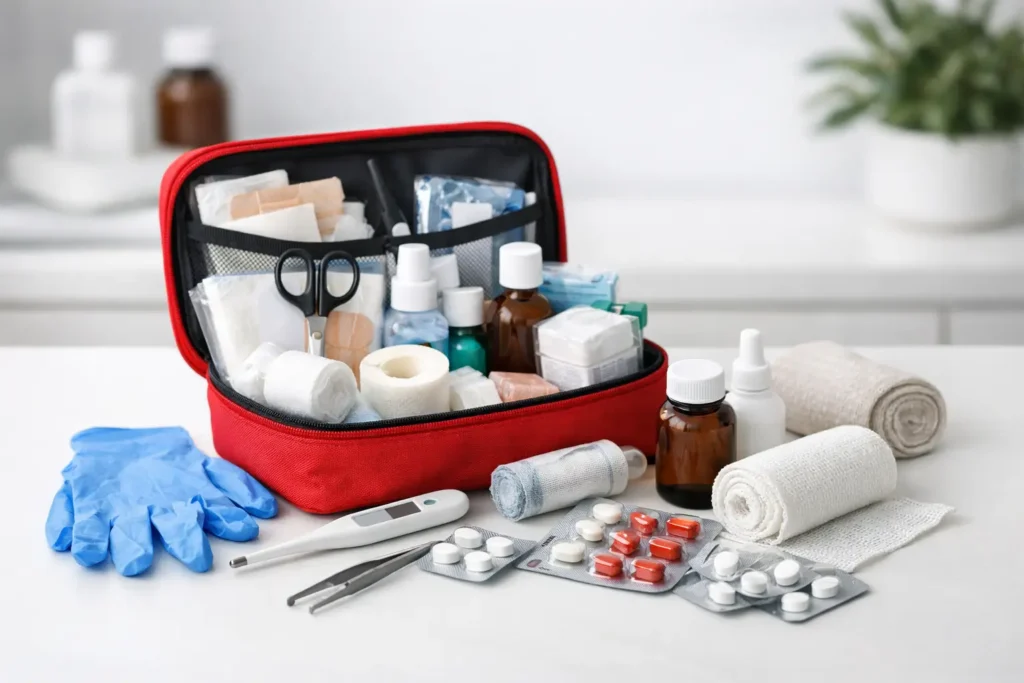
A practical first aid kit should include these core items:
- Adhesive bandages in several sizes, sterile gauze pads, medical tape, and elastic wrap
- Disposable gloves, antiseptic wipes, saline wound wash, and antibiotic ointment if appropriate for your household
- Tweezers, blunt-tip scissors, a digital thermometer, instant cold packs, and a clean oral syringe or medicine cup
- Over-the-counter pain and fever relief suitable for the adults or children in your home, used only as directed on the label
- Burn gel or nonstick dressings, hydrocortisone cream for minor itching, and an antihistamine for minor allergic symptoms when appropriate
Store supplies in a dry, easy-to-find place. Avoid putting the kit high on a shelf where it cannot be reached quickly, but keep medications secured from young children and pets. Check the kit every six months. Replace used items, damaged packaging, dead thermometer batteries, and expired products.
Allcura Health makes it easier to gather everyday pharmacy staples in one order, but convenience should never replace reading labels. Follow age limits, dosing instructions, warnings, and interaction guidance for every medication you keep at home.
How to Handle Common Minor Injuries
Cuts and scrapes
For a small cut or scrape, wash your hands, then rinse the wound under clean running water. Remove visible dirt with clean tweezers if it comes out easily. Apply gentle pressure with sterile gauze or a clean cloth until bleeding stops, then use a thin layer of ointment if desired and cover the area with a bandage.
Change the dressing when it becomes wet, dirty, or loose. Seek medical care for deep wounds, wounds that will not stop bleeding after firm pressure, animal or human bites, embedded objects, or signs of infection such as increasing redness, warmth, swelling, pus, fever, or red streaks.
Minor burns
For a small thermal burn, cool the area under cool running water for about 20 minutes as soon as possible. Remove rings, watches, or tight clothing near the burn before swelling begins, unless material is stuck to the skin. Cover it loosely with a clean, nonstick dressing.
Do not apply ice, butter, toothpaste, or oily home remedies. These can worsen tissue damage or trap heat. Get urgent medical help for burns involving the face, hands, feet, genitals, major joints, large areas of skin, electrical exposure, chemicals, or skin that looks white, charred, or deeply damaged.
Sprains, bumps, and bruises
A sudden twist, fall, or sports injury may respond to rest and a cold pack wrapped in a towel. Apply the cold pack for short intervals rather than directly on bare skin. Elevation can help with swelling, while a snug elastic wrap may provide support if it does not cause numbness, tingling, increased pain, or color changes in fingers or toes.
A sprain can look a lot like a fracture. Do not assume it is minor if the person cannot bear weight, a joint appears deformed, pain is severe, or swelling is immediate and significant. Get evaluated instead of trying to force the area back into place.
Nosebleeds
Sit upright and lean slightly forward. Pinch the soft part of the nose continuously for 10 to 15 minutes and breathe through the mouth. Leaning backward can send blood down the throat, causing coughing or nausea.
Call for medical advice or urgent care if bleeding is heavy, follows a head injury, lasts longer than 20 minutes, or occurs with dizziness, weakness, or blood-thinning medication use.
When First Aid Is Not Enough
Some situations need urgent professional care from the start. Call 911 for severe bleeding that does not stop with direct pressure, difficulty breathing, blue or gray lips, sudden confusion, one-sided weakness, fainting, serious allergic reactions, or suspected poisoning. If an adult or child may be choking and cannot cough, speak, or breathe, call 911 and follow dispatcher instructions.
For possible poisoning, do not make someone vomit unless a medical professional tells you to. Keep the product container nearby so you can report exactly what was swallowed, inhaled, or spilled. For chemical splashes on skin or in the eyes, flush with clean running water and seek immediate guidance.
First aid also has limits when symptoms are unclear. A persistent fever, worsening pain, repeated vomiting, dehydration, a spreading rash, or an injury that is not improving deserves medical advice. Trust your instincts, especially with infants, older adults, pregnant people, and anyone with chronic conditions.
Keep Your First Aid Plan Simple
Supplies are only useful if people know how to use them. Show household members where the kit is stored, keep emergency contacts visible, and consider taking a certified first aid and CPR class. Hands-on training builds confidence for situations that a product label cannot fully prepare you for.
The goal is not to handle every emergency alone. It is to respond safely, protect the injured person from further harm, and get the right level of care without delay. Keep your kit ready, replace what you use, and give yourself permission to call for help whenever the situation feels bigger than basic care.
