
Uncategorized
7 Nausea Relief Options at Home That Help
Jun
That sick, unsettled feeling can throw off your whole day fast. When you need nausea relief options at home, the goal is usually simple – calm your stomach, stay hydrated, and figure out whether this is something you can manage on your couch or something that needs medical care.
Nausea can show up for a lot of reasons. Maybe it is a stomach bug, motion sickness, a hangover, stress, a new supplement, food that did not sit right, or a medication side effect. The cause matters because the best fix for one kind of nausea is not always the best fix for another. Still, there are a few at-home moves that are practical, easy to try, and worth having on hand.
Best nausea relief options at home to try first
If nausea is mild to moderate, start with the basics before reaching for anything too heavy. In a lot of cases, your stomach needs less input, not more.
1. Sip fluids slowly
Dehydration can make nausea worse, and nausea can make dehydration happen fast. That is why small sips matter. Plain water works, but if your stomach is touchy, cold water, ice chips, or an oral rehydration drink may go down easier than a full glass.
The key is pace. Big gulps can trigger more discomfort, especially if you have already vomited. Try a few sips every few minutes instead of chugging. If you cannot keep even small amounts down for several hours, that is when home care starts to become less reliable.
2. Keep food bland and light
When food sounds awful, forcing a full meal usually backfires. A bland snack can be enough to settle the stomach without making it work too hard. Crackers, dry toast, plain rice, applesauce, bananas, or a small amount of broth are common go-to choices because they are easy on digestion.
Greasy, spicy, very sweet, or heavily seasoned foods are more likely to make nausea drag on. The same goes for large portions. A few bites now and a little more later is often the better call.
3. Try ginger if your stomach tolerates it
Ginger is one of the better-known home remedies for nausea, and for many people it earns that reputation. Ginger tea, ginger chews, ginger capsules, or even flat ginger ale with real ginger can help take the edge off.
This is one of those it-depends options. Some people get real relief from ginger, while others find the taste or spice makes them feel worse. If strong flavors bother you, start small. If you are pregnant, on blood thinners, or dealing with ongoing symptoms, it is smart to check with a healthcare professional before using supplements regularly.
4. Use fresh air and a calm setting
A hot, stuffy room can make nausea feel more intense. So can strong smells from food, cleaning products, smoke, or perfume. Sometimes the fix is not a product at all – it is getting to a cooler room, opening a window, turning on a fan, or stepping outside for a few minutes.
This matters more than people think. When your stomach feels unstable, sensory overload can push it over the edge. Quiet, cool, and low-smell usually wins.
5. Rest upright instead of lying flat
If nausea hits, collapsing fully flat on the bed is not always the best move. Sitting up slightly or resting with your head elevated can reduce that sloshy, reflux-like feeling that sometimes comes with nausea.
Movement can also make symptoms worse, especially if motion sickness is part of the problem. So think stillness, not total collapse. A reclined position with support behind your back is often more comfortable than lying straight down.
6. Consider acupressure bands
For motion-related nausea or mild queasiness, acupressure wrist bands are a simple at-home option. They are designed to put pressure on a point on the inner wrist that some people find helpful for nausea.
These are not magic, and results are mixed. But they are low effort, drug-free, and easy to try if you want something with minimal downside. If nausea tends to hit during travel, keeping a pair around can be worth it.
7. Use over-the-counter nausea support when it fits
Sometimes the fastest route is an OTC product, especially if you know what is causing the nausea. Motion sickness formulas, antacids, bismuth-based stomach remedies, and hydration support products can all play a role depending on the symptoms.
This is where matching the product to the problem matters. If nausea comes with heartburn or sour stomach, an antacid may make more sense than a motion-sickness product. If it comes with diarrhea or stomach upset after food, a bismuth-based option might be the more practical pick. If the issue is travel, a motion-sickness remedy is usually the better fit. Allcura Health is built around that convenience-first approach – quick access to everyday, no-prescription health products that people want without the extra hassle.
How to choose nausea relief options at home based on the cause
Not all nausea feels the same, and the pattern can tell you a lot.
If it started after a car ride, flight, boat trip, or amusement ride, motion sickness is the obvious suspect. In that case, minimizing movement, focusing your eyes on a stable point, trying acupressure, and using an OTC motion-sickness product may help more than food does.
If it showed up with diarrhea, cramping, or vomiting after eating, a stomach bug or food-related irritation may be more likely. Fluids and rest matter most here. You do not need to rush into heavy foods. Let your stomach settle first, then reintroduce bland foods gradually.
If nausea comes with heartburn, a burning chest, a sour taste, or a heavy feeling after meals, reflux or indigestion may be behind it. Smaller meals, sitting upright, and using an appropriate OTC stomach remedy may work better than ginger tea alone.
If stress is the trigger, the stomach often follows the nervous system. Slow breathing, a cool room, plain crackers, and reducing stimulation can help. That kind of nausea is real, even if the source is not an infection or food issue.
What usually makes nausea worse
A lot of home care is really about avoiding the obvious mistakes. Rich meals, alcohol, smoking, intense exercise, and strong smells can all keep nausea going longer than it has to. So can taking vitamins or supplements on an empty stomach.
Pain relievers can be a mixed bag too. Some people get nausea from common OTC medications, especially if they take them without food. If that pattern sounds familiar, check the label and think about timing before taking another dose.
Caffeine is another maybe. For some people, a small amount helps a headache-related upset stomach. For others, it irritates the stomach lining and makes everything worse. If your stomach is already unstable, plain fluids are usually the safer place to start.
When home care is not enough
Most short-term nausea improves with time, fluids, and a little caution. But there are moments when staying home and hoping it passes is not the right move.
Get medical help sooner if nausea comes with severe belly pain, chest pain, confusion, signs of dehydration, blood in vomit, a high fever, a stiff neck, fainting, or trouble breathing. The same goes if you cannot keep fluids down, vomiting lasts more than a day, or nausea keeps returning without a clear reason.
Pregnancy-related nausea, nausea after a head injury, or nausea linked to a new medication also deserves closer attention. Home remedies can help with comfort, but they should not replace care when the bigger issue needs to be addressed.
Stocking your home before nausea hits
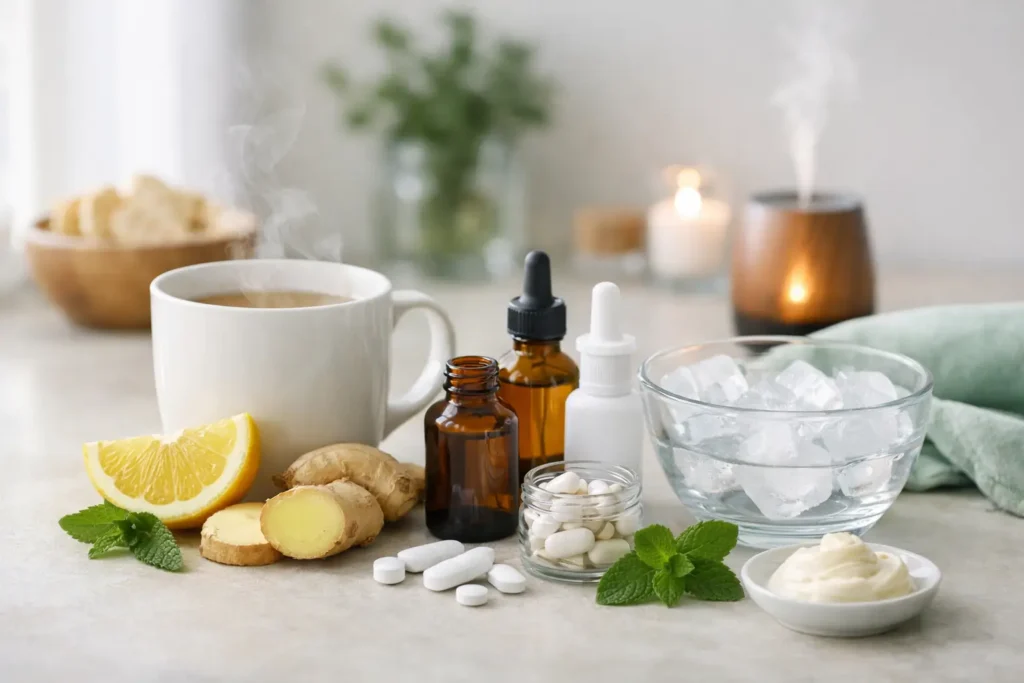
The easiest time to prepare for nausea is when you are not nauseated. A few practical basics can save time when your stomach turns on you out of nowhere: crackers, broth, electrolyte drinks, ginger chews or tea, a bismuth-based remedy, an antacid, and a motion-sickness option if travel is a trigger for you.
That does not mean buying everything at once or using products blindly. It means having the right kind of everyday support nearby, so you are not stuck searching at the exact moment you feel awful.
When nausea hits, keep it simple. Small sips, bland food, less motion, fewer smells, and the right OTC support can go a long way. And if your gut is telling you this feels bigger than a passing stomach issue, trust that instinct and get checked.
