
Uncategorized
Toothpaste Versus Whitening Strips: What Works?
Jul
Coffee at 8 a.m., red sauce at dinner, and a quick glance in the mirror can make tooth color feel more noticeable than it used to. When comparing toothpaste versus whitening strips, the real question is not which product has the loudest promise. It is whether you need help lifting fresh surface stains or want a more visible change in the natural shade of your teeth.
Both options can earn a place in a simple at-home routine. Whitening toothpaste is built for daily maintenance. Whitening strips are designed for a more concentrated treatment period. Knowing the difference helps you spend smarter, avoid unnecessary sensitivity, and choose a product you can actually stick with.
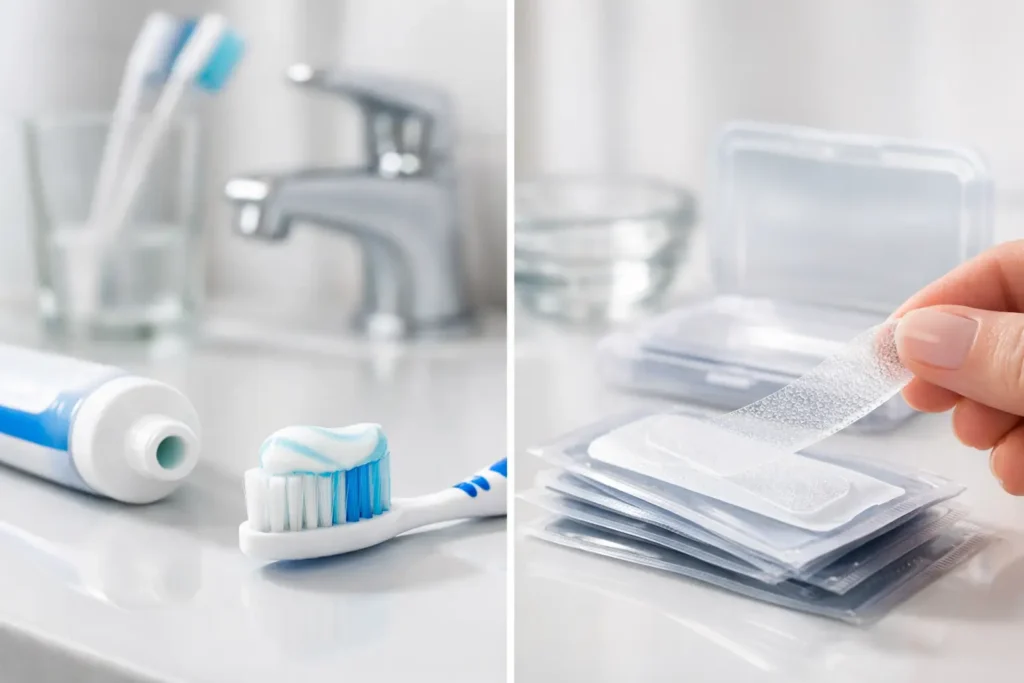
Toothpaste Versus Whitening Strips: The Main Difference
Whitening toothpaste primarily targets stains on the surface of enamel. Many formulas use gentle polishing ingredients to remove discoloration left behind by coffee, tea, tobacco, dark berries, cola, and similar habits. Some also contain low levels of whitening agents, but toothpaste is on your teeth for a short time before you rinse. That limits how much deeper whitening it can deliver.
Whitening strips sit directly on the front surfaces of teeth for a set amount of time. Most use peroxide-based ingredients that can lighten tooth color beyond surface stain removal. Because the active ingredients stay in contact with the enamel longer, strips are generally the better choice for people looking for a noticeably brighter result at home.
That does not make whitening toothpaste a lesser product. It serves a different purpose. Think of toothpaste as your daily cleanup and upkeep, while strips are more like a focused brightening session.
What Whitening Toothpaste Can Realistically Do
A good whitening toothpaste can make teeth look cleaner and brighter over time, especially if the discoloration is mostly recent surface staining. It is convenient because it replaces a step you already do twice a day. There is no tray to wear, no timing your treatment around meals, and no extra product to remove.
This makes it a practical choice if you want gradual improvement without changing your routine. It can also help maintain results after you have used whitening strips or had professional whitening. If your morning coffee is nonnegotiable, daily stain control may be more useful than an occasional intense treatment.
The trade-off is that expectations need to stay realistic. Whitening toothpaste will not usually transform naturally yellow-toned teeth by several shades. It also cannot change the color of crowns, veneers, bonding, fillings, or dentures. If one front tooth has a restoration, whitening may make the surrounding natural teeth lighter while the restoration stays the same shade.
Some whitening toothpastes are more abrasive than others. Used as directed, they are generally made for regular use, but aggressive brushing can still wear on enamel and irritate gums. Use a soft-bristled toothbrush and let the toothpaste do the work. Scrubbing harder is not a shortcut to whiter teeth.
When Whitening Strips Make More Sense
Whitening strips are the stronger at-home option when you want a visible change for an upcoming event, photos, a vacation, or simply a confidence reset. Treatment schedules vary, but many are used once a day for one to two weeks. Results can appear within several days and may continue to develop across the full treatment period.
Consistency matters. Skipping days can make the process less predictable, and wearing strips longer than the label directs does not guarantee faster or better results. It can, however, raise the chance of tooth sensitivity or gum irritation.
Strips work best on healthy natural teeth that are reasonably straight and easy to cover. If your teeth are crowded, the strip may not make full contact in every area, leaving uneven results. They also mainly brighten the teeth visible when you smile, rather than every tooth in your mouth.
For many adults, temporary sensitivity is the biggest drawback. You may feel a quick, sharp response to cold drinks or air during treatment. This often settles after you stop or take a break, but it is a signal to adjust your routine rather than push through a full course without pause.
Cost, Time, and Convenience
Whitening toothpaste is typically the lower-cost, lowest-effort option. You use it during your normal brushing routine, making it easy to keep in a bathroom cabinet or add to your regular toiletry order. It is a sensible choice for long-term stain management and for shoppers who prefer a slow, steady approach.
Whitening strips usually cost more per treatment cycle, but they can offer more noticeable results. They also ask more of your schedule. You need to apply them carefully, wait through the wear time, and avoid eating or drinking while they are on. For someone with a busy household or packed workday, that extra step may be worth it only when the payoff is meaningful.
The best value depends on your goal. If your teeth already look fairly bright but pick up stains easily, toothpaste may be enough. If you are starting with deeper discoloration and want a stronger at-home result, strips often deliver better value than repeatedly buying products that only remove surface stains.
Can You Use Whitening Toothpaste and Strips Together?
Yes, but more is not always better. A whitening toothpaste can be used as part of your daily routine while you complete a strip treatment, provided your teeth and gums feel comfortable. Still, if sensitivity starts, switch temporarily to a toothpaste made for sensitive teeth and consider taking a day or two off from strips.
Avoid stacking multiple whitening treatments at once. Using strips, whitening pens, highly abrasive toothpaste, and other brightening products all in the same period can be hard on sensitive teeth. One focused product does more for a predictable routine than a crowded cabinet full of overlapping treatments.
After a strip cycle, whitening toothpaste can be useful for maintaining the look. This approach gives you a stronger initial brightening push, followed by simple daily stain control.
Who Should Skip DIY Whitening for Now?
At-home whitening is not the right move for every smile. If you have untreated cavities, cracked teeth, bleeding gums, significant gum recession, or ongoing tooth pain, schedule a dental checkup before using whitening products. Peroxide can irritate exposed areas and may make an existing problem more uncomfortable.
You should also ask a dentist for guidance if you are pregnant or breastfeeding, have extensive dental work, wear braces or clear aligners, or have a history of severe sensitivity. Whitening products do not correct gray discoloration caused by injury, certain medications, or internal tooth changes. Those situations often need a professional recommendation instead of another over-the-counter product.
A dentist can also help if your teeth look uneven after whitening. Sometimes the issue is not overall color but plaque buildup, tartar, old fillings, or a single darker tooth that needs a different solution.
How to Choose the Right Product
Start with the result you want. Choose whitening toothpaste if you want a low-maintenance option for everyday surface stains, gradual brightness, and post-treatment upkeep. Choose whitening strips if you want to lighten your natural tooth shade more noticeably over a short, label-directed treatment period.
Then consider your sensitivity history. If cold drinks already make you wince, start cautiously. A sensitivity-focused toothpaste may be the better first purchase, or you may prefer a lower-intensity whitening approach. Read package directions before buying, especially the recommended wear time, treatment length, and age guidance.
Finally, be honest about what you will use. The best product is not the strongest formula sitting unopened in a drawer. It is the one that fits your schedule, your budget, and the condition of your teeth. For easy access to everyday oral care and personal-care essentials, Allcura Health keeps shopping straightforward with no prescription needed.
A brighter smile does not have to mean an overcomplicated routine. Pick toothpaste for daily stain control, reach for strips when you want a more visible boost, and give your teeth a break whenever sensitivity tells you to slow down.
