
Uncategorized
Supplement Label Reading Guide for Smarter Buys
Jul
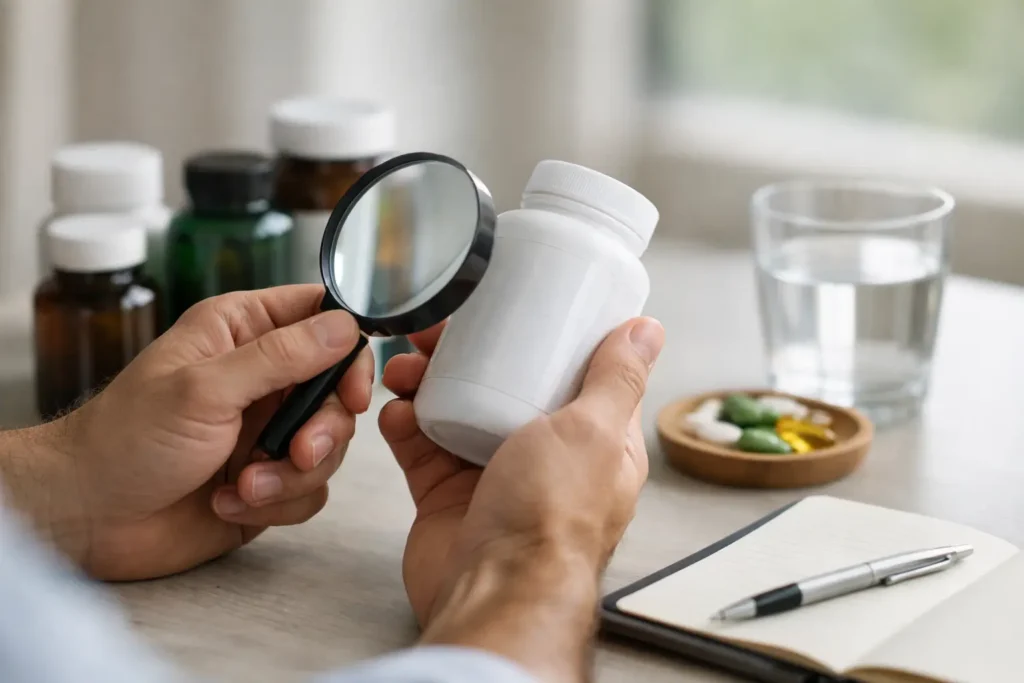
A supplement bottle can look convincing in five seconds: bold benefits on the front, a long list of nutrients on the back, and a price that feels like a deal. This supplement label reading guide helps you look past the marketing fast, so you can choose products that fit your routine, budget, and health goals without buying more than you need.
Supplements can be useful for filling specific gaps or supporting a defined goal. They are not automatic replacements for food, sleep, movement, or medical care. The label is where you find the details that matter before you add anything to your cart.
Start With the Supplement Facts Panel
The Supplement Facts panel is the fastest way to compare products. It tells you what is actually in a serving, how much you get, and how that amount relates to a daily benchmark when one exists. Ignore the oversized front-label promise for a minute and start here.
First, check the serving size. One capsule is simple. Two capsules, four gummies, or one scoop twice a day changes the real cost and the amount you are taking. A bottle that says “120 capsules” may only provide 30 servings. If you are comparing prices, compare cost per serving, not just the bottle price.
Next, look at the amount per serving. With vitamins and minerals, you will often see a percentage of Daily Value, shown as %DV. This gives useful context, but it is not a universal scorecard. A high percentage may make sense for one nutrient and be unnecessary or unsuitable for another. More is not automatically better.
Some ingredients have no established Daily Value. That is common with herbs, enzymes, amino acids, probiotics, and many specialty blends. “Daily Value not established” does not mean the ingredient is ineffective. It means there is no official daily reference amount to compare against.
Read Ingredients, Not Just Claims
Front labels are built to get attention. Terms such as “energy,” “immune support,” “natural,” “clean,” or “advanced formula” can describe a product’s positioning, but they do not tell you the dose, the form of the ingredient, or whether it suits you.
Turn the bottle around and identify the active ingredients first. For a magnesium product, for example, the form matters. Magnesium citrate, glycinate, oxide, and other forms can differ in elemental magnesium content and how people tolerate them. For a vitamin B12 product, cyanocobalamin and methylcobalamin are different forms. A label should make that information clear.
Then check the other ingredients section. This is where you may find capsule materials, sweeteners, flavoring, dyes, binders, oils, gelatin, or common allergens. A gummy may be easier to take than a tablet, but it can also include sugar or sugar alcohols. A powder can make flexible dosing easier, while a capsule may be more convenient for travel. There is no single best format. Choose the one you will use consistently and tolerate well.
If you follow a specific dietary preference or need to avoid an allergen, do not rely only on a “vegan,” “gluten-free,” or “dairy-free” callout. Review the full ingredient list and allergen statement every time, especially when repurchasing. Formulas can change.
Watch for Proprietary Blends
A proprietary blend groups several ingredients under one total amount without listing the exact dose of each ingredient. For example, a pre-workout, libido formula, sleep blend, or herbal supplement may show a 1,500 mg blend containing several compounds.
That format makes comparison harder. You know the total blend weight, but not whether the ingredient you want is present in a meaningful amount. It may be the main component, or it may be included in a very small amount for label appeal.
A blend is not automatically a reason to reject a product. Some brands use them to protect a formula. Still, transparent individual dosing gives you more control, especially if you are trying to avoid duplicate ingredients, monitor stimulants, or compare one product against another. When your goal is precise, clear labels usually win.
Check the Directions and Warnings Before Checkout
The recommended use section can be easy to miss, but it matters. It tells you whether to take the product with food, how often to use it, and the maximum suggested daily amount. Do not assume a larger dose will produce faster results. With many nutrients and botanicals, extra servings can increase side effects without improving the outcome.
Warnings deserve the same attention as benefits. Look for cautions about pregnancy or breastfeeding, age restrictions, surgery, alcohol use, driving, medical conditions, and medication interactions. This is particularly relevant for products containing caffeine, melatonin, St. John’s wort, fat-soluble vitamins, iron, potassium, high-dose minerals, or concentrated herbal extracts.
If you take prescription medication, use several supplements, have a chronic condition, or are pregnant or breastfeeding, ask a pharmacist or qualified clinician before starting a new supplement. This is not a formality. Supplements can affect how certain medicines work, and multiple products can unintentionally stack the same ingredients.
Avoid Accidental Ingredient Stacking
Stacking happens when the same nutrient or active ingredient appears in more than one product. A multivitamin, energy powder, hydration mix, hair supplement, and sleep formula can overlap in ways that are not obvious at first glance.
Before combining products, compare the Supplement Facts panels side by side. Pay special attention to vitamins A, D, E, and K; iron; zinc; magnesium; niacin; caffeine; and herbal ingredients. You may find that one well-chosen product covers what you were about to buy in three separate bottles.
Caffeine deserves extra attention because it may appear as caffeine anhydrous, green tea extract, guarana, yerba mate, coffee fruit, or other botanical sources. If a label does not clearly state total caffeine per serving, it is harder to manage your intake. Consider your coffee, tea, energy drinks, and pre-workout use as part of the same daily picture.
Know What Quality Signals Can and Cannot Tell You
Quality statements can help, but they should not replace label reading. A manufacturer may mention good manufacturing practices, third-party testing, batch testing, or certifications. These details can be useful signs that a company takes production seriously.
At the same time, certification language is not a guarantee that a product will deliver a specific health result. Supplements are not approved like prescription drugs before they reach the market. Be skeptical of products that promise instant, dramatic, or guaranteed outcomes, especially for weight loss, sexual performance, muscle gain, or serious health conditions.
Look for a clear manufacturer or distributor name, a lot number, an expiration or best-by date, and a way to identify the product. Avoid packaging that is damaged, has a broken seal, or gives vague details about what is inside. A lower price can be a smart buy, but only if you can verify the serving size, ingredients, directions, and basic product information.
Use This Supplement Label Reading Guide for Your Goal
The right label depends on what you are shopping for. A basic vitamin D product may call for a simple comparison of dose, form, serving count, and price. A sports supplement may require closer attention to stimulant content, blend transparency, and timing instructions. A digestive product may list strains, enzyme types, or fiber content that make a direct comparison more involved.
Start with one clear question: what am I trying to support? Then choose a product whose label answers that question directly. If you want a single nutrient, a formula with a long list of unrelated extras may not be the best value. If you want a convenient all-in-one option, make sure the included doses are relevant rather than just impressive-looking.
At Allcura Health, convenience should not mean guessing. Read the serving size, check the active ingredients, scan warnings, and compare the full cost per serving before you buy. A few focused minutes with the label can help you build a supplement routine that is simpler, safer, and worth keeping.
